
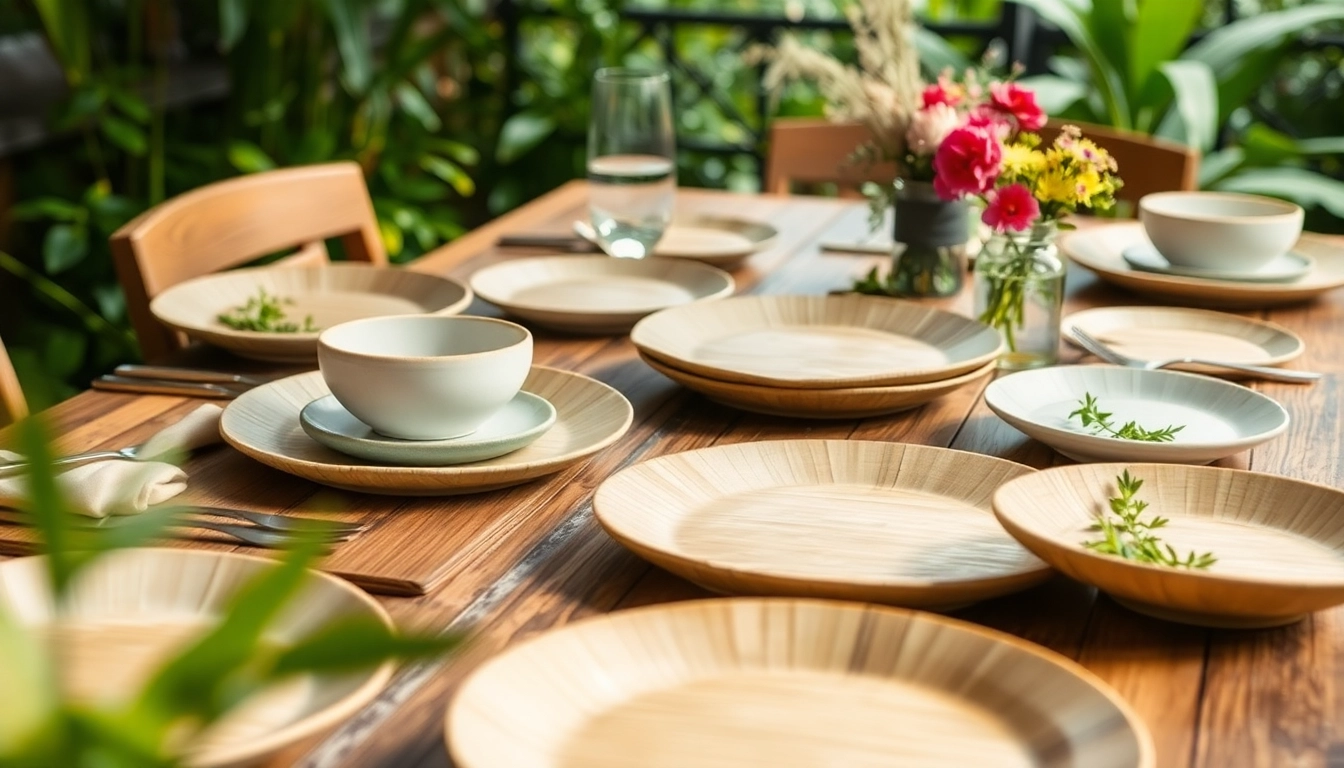
Understanding Compostable Plates
What are Compostable Plates?
Compostable plates are eco-friendly alternatives to traditional disposable plates made from materials that can break down and return to the earth without leaving harmful residues. Unlike plastic or polystyrene plates, which remain in landfills for hundreds of years, compostable plates are crafted from renewable resources and are designed to decompose under appropriate composting conditions. This sustainable choice aligns with an increasing demand for environmentally responsible dining options. For those interested in making a sustainable switch, understanding compostable plates is essential.
Materials Used in Compostable Plates
The composition of compostable plates significantly impacts their compostability and performance. Common materials include:
- Sugarcane Bagasse: This is a byproduct of sugar production and is both sturdy and compostable, making it an excellent choice for disposable dinnerware.
- Bamboo: Known for its rapid growth and sustainability, bamboo plates are strong and elegant options.
- PLA (Polylactic Acid): Derived from corn starch, PLA plates are clear and sturdy, yet they require industrial composting facilities to break down efficiently.
- Wheat Straw: This material is another byproduct of grain processing and provides a biodegradable alternative to plastic.
Benefits of Using Compostable Plates
The advantages of using compostable plates extend beyond environmental benefits:
- Eco-Friendly: They help reduce plastic waste and lower carbon footprints.
- Safe for Food: Made from natural materials, these plates are free from harmful chemicals that can leach into food.
- Versatile: Suitable for various occasions, from outdoor parties to formal events.
- Convenient Composting: Compostable plates can be added to backyard compost systems or commercial composting facilities.
Choosing the Right Compostable Plates
Factors to Consider
When selecting compostable plates, consider the following factors:
- Usage: Determine whether the plates will be used for hot, cold, or oily food. Different materials have different resistances to heat and moisture.
- Size: Choose plates that suit the serving sizes relevant to your gathering.
- Durability: Assess whether the plate needs to hold heavy meals or merely serve appetizers.
- Composting Facility Access: Verify that your local area supports composting if you plan to dispose of them responsibly.
Size and Shape Variations
Compostable plates come in various sizes and shapes, catering to different needs. Common shapes include:
- Round Plates: Ideal for standard meals, available in various diameters.
- Square Plates: Often used for a more modern aesthetic.
- Compartment Plates: Useful for separating different food items, particularly in catering scenarios.
Common Certifications and Labels
When purchasing compostable plates, look for certifications that prove their eco-friendliness:
- BPI Certification: Indicates that the product meets standards for compostability.
- ASTM D6400: Standard specification for labeling of plastics designed to be composted in municipal or industrial facilities.
- EN 13432: European standard for biodegradable plastics and packaging materials.
How to Properly Dispose of Compostable Plates
Composting Methods for Plates
To properly dispose of compostable plates and ensure they break down as intended, follow these composting methods:
- Home Composting: If your compost pile is balanced with nitrogen-rich greens and carbon-rich browns, compostable plates can be added directly. Shred them for faster decomposition.
- Commercial Composting: Many municipalities have commercial composting services that can handle compostable plates. Check for local programs.
- Compost Bins: Use compost bins or tumbler systems for effective composting at home, ensuring proper aeration and moisture levels.
Common Mistakes to Avoid
Avoid these common mistakes when disposing of compostable plates:
- Contamination: Ensure plates are free from non-compostable debris like plastic utensils and food with heavy sauce residue.
- Improper Compost Conditions: A successful composting process requires the right balance of heat, moisture, and oxygen.
- Ignoring Local Regulations: Always check local guidelines for composting to ensure that your efforts are effective.
FAQs About Composting Compostable Plates
Are compostable plates really compostable?
Yes, most paper and plant-based compostable plates will break down in composting facilities, returning nutrients to the soil, but they must not be lined with plastic.
Where should I dispose of compostable plates?
Compostable plates can go into home compost bins or commercial composting facilities. Ensure they’re directed to appropriate composting streams.
Can you compost labeled compostable plates at home?
Yes, as long as they are placed in a properly maintained home compost pile that includes both green and brown materials for balance.
Do compostable plates release toxins when burned?
Many compostable plates are designed to be environmentally friendly, but burning them can release toxins. Always compost instead.
How can I tell if my compostable plates are suitable for home composting?
Check for labels and certifications like BPI or ASTM D6400, which indicate that they can break down in home compost systems.
Comparing Compostable Plates to Traditional Options
Environmental Impact of Disposable Plates
Traditional disposable plates, like plastic and polystyrene, contribute significantly to environmental pollution, taking hundreds of years to decompose. They also often involve the extraction of fossil fuels, further heightening their carbon footprint. In contrast, compostable plates minimize this impact, providing sustainable alternatives that decompose quickly, returning nutrients to the soil and creating a closed-loop ecosystem.
Cost Considerations
While compostable plates can sometimes come with a higher price tag compared to plastic plates, their cost should be evaluated against the environmental benefits they bring. The investment supports sustainability efforts and encourages a shift away from single-use plastics. Moreover, bulk purchasing options are often available, making compostable plates a more economically viable solution for events and gatherings.
Performance and Usability
In terms of functionality, compostable plates have come a long way. Many can withstand heat, are resistant to moisture, and can hold heavier foods without bending or leaking. They are designed to perform similarly to traditional plates, ensuring that users do not have to sacrifice convenience for sustainability. Additionally, compostable plates often provide a more stylish presentation compared to their plastic counterparts, appealing to environmentally-conscious consumers.
Frequently Asked Questions about Compostable Plates
Are compostable plates suitable for hot foods?
Yes, most compostable plates can handle hot foods, especially those made from sugarcane or bamboo, which are designed for such use.
How long do compostable plates take to decompose?
In a composting environment, compostable plates typically decompose within 90 to 180 days, depending on compost conditions.
Can you use compostable plates in the microwave?
Some compostable plates are microwave-safe, but always check the manufacturer’s instructions before use.
Where can I buy compostable plates?
Compostable plates can be found in many supermarkets, online marketplaces, or eco-friendly stores catering to sustainable products.
Are compostable plates safe for children?
Yes, compostable plates made from natural materials are generally deemed safe for children, as they do not contain harmful chemicals found in some traditional disposable options.
About the Author