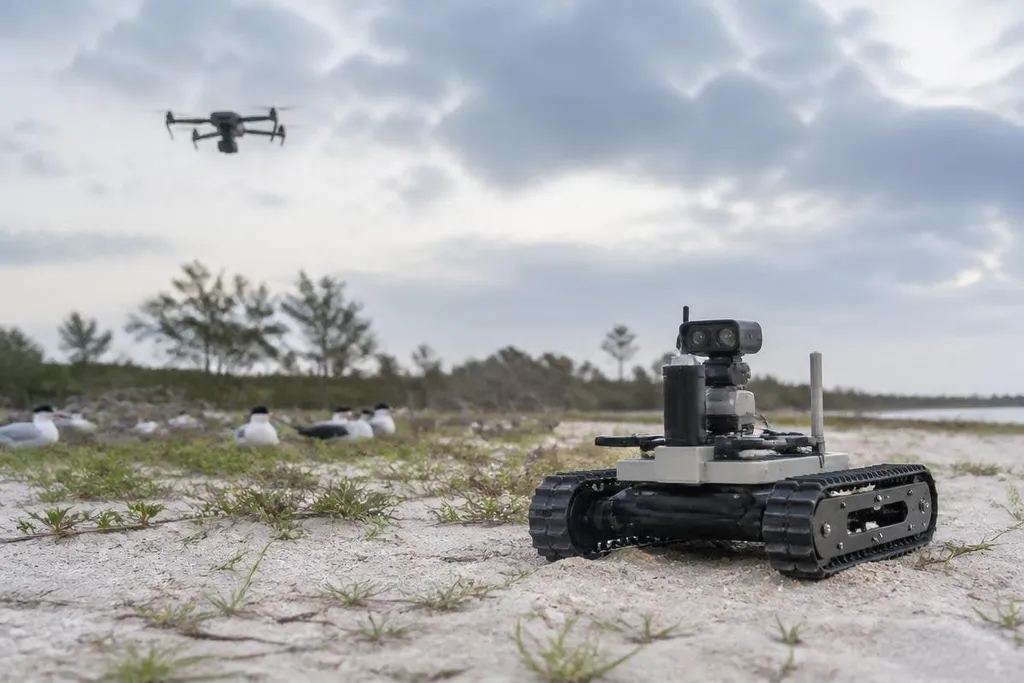
A wildlife robot can watch a nesting site, move through a forest, or collect data underwater without sending a person into the habitat. The hard part is proving that the robot helps conservation more than it disturbs the animals or adds work for field teams.
Quick read
- A useful robot needs a named task, site, species, and measure of success.
- Battery life, noise, weather protection, and data handling can decide whether a trial works.
- Conservation teams need field results, not a video of a machine moving well.
Start with the task
The word “robot” covers several different tools. A small ground vehicle might carry a camera across a nesting area. An aerial system might inspect a wetland from above. An underwater robot could record a reef without sending a diver into the water.
Those machines solve different problems, so a conservation team should start with the task. Is the goal to count animals, find an injured animal, check a protected boundary, collect water data, or watch a site at night? Each task needs a different sensor, route, speed, and safety plan.
A camera alone may record plenty of footage while answering none of the team’s questions. A useful trial states what the robot will detect, how often it will collect data, and who will review the results.
What changes in the field
Robots can let people gather data from places that are hard, wet, cold, dangerous, or closed to visitors. That may reduce the number of trips into a sensitive area, but the benefit depends on the robot’s full work cycle.
A team still has to charge the batteries, check seals, recover the machine, label the files, and repair faults. If each field visit creates hours of extra data work, the robot may shift the burden rather than cut it.
Noise and movement matter too. A vehicle that approaches animals closely may change their behavior. A drone may cause a nesting bird to leave. Any claim about reduced disturbance needs a measured comparison between robot use and the current human method.
The useful number could be minutes spent near a site, animals counted per survey, false alerts per hour, or the share of footage that a person can review. Without that measure, “better monitoring” says very little.
The evidence gap
A demonstration can show that a robot moves, turns, or records video. It cannot show that the system works through rain, mud, poor light, thick plants, salt water, or a week of missed communications.
A sound report names the robot model, sensor package, location, dates, operating time, and failure rate. It also explains what happened when the machine got stuck, lost its link, ran low on power, or recorded unusable data.
For a conservation team comparing autonomous patrols with staff visits or fixed cameras, Robot24.com can place a wildlife robot’s model, sensors, site, and test date beside its reported result. That record helps you judge whether the machine worked beyond a controlled trial.
The missing proof is often the part that decides the purchase. A robot may identify one species well in daylight and perform poorly at night.
It may work on dry ground but fail near water. It may collect accurate images that take too long to sort.
I'd wait for results from the actual habitat before treating a wildlife robot as ready for regular conservation work.
A field check before approval
Use this checklist when a project team reviews a proposal:
- Name the task: State the species, site, survey goal, and current method.
- Record the trial: Log operating hours, weather, battery swaps, faults, and lost data.
- Measure disturbance: Compare animal behavior during robot use with the normal survey method.
- Check the files: Count usable records and the hours needed for human review.
- Plan recovery: Set out who retrieves the robot, how staff reach it, and what happens after a failure.
- Set a stop rule: Pause the trial if the machine harms animals, loses data, or creates more field work than planned.
What comes next
The next useful step is a controlled field trial with a fixed task and a clear number to beat. Until a team can show that result across the habitat where it plans to work, wildlife robots remain promising equipment under test, not a proven replacement for conservation staff.